

A Leader in Bowling Lane Technology
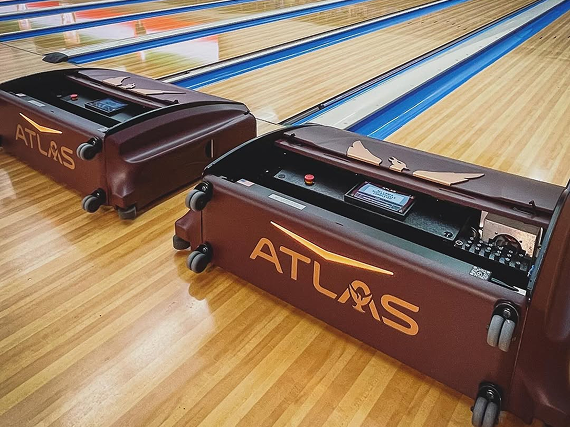
Kegel is widely recognized for its advanced lane machines, including the Atlas family, which are used in bowling centers, training facilities, and professional environments worldwide. These machines are engineered to deliver consistent oil patterns that directly influence ball motion and overall playing conditions.
With the addition of the Beetronics touchscreen, Kegel enhances the Atlas Smart Lane Machine platform with a modern interface that streamlines operator interaction while maintaining the precision required for lane maintenance.
Bringing Advanced Control to Atlas Lane Machines
The Atlas lane machine gives operators full control over lane conditioning while keeping daily operation streamlined. Throughout a shift, staff may move machines between lanes, apply oil patterns, or adjust settings based on changing conditions.
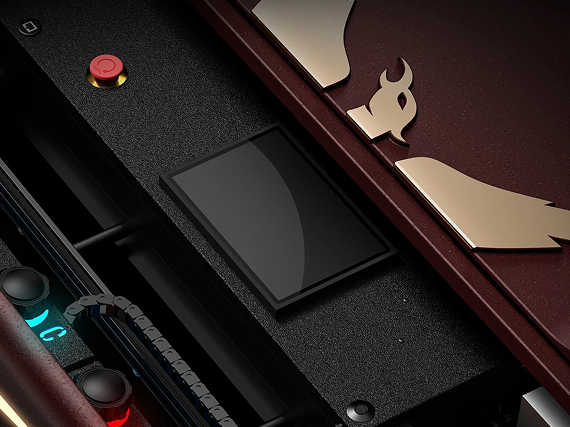
The Beetronics 10TS7M brings these functions to life on a single interface. From the main screen, operators can quickly access core actions such as Move and Oil, allowing seamless transitions between tasks.
Within the menu, key functions including Settings, Patterns, Scheduler, Backups/Restore, and Tests are logically organized. This layout simplifies access to lane programs, scheduled routines, and system diagnostics, reducing the learning curve for new users while supporting experienced operators.
Engineered for Performance in Bowling Environments
Bowling centers operate continuously, with equipment running daily and subject to frequent interaction. The Beetronics touchscreen is built for these conditions, with industrial-grade construction designed for long-term use.
Its responsive touch performance allows operators to move between screens and adjust settings without interruption, while the durable design supports consistent operation over time. This ensures the Atlas machine remains a reliable part of daily lane maintenance.
We were focused on finding something that was capable of displaying Kegel’s custom UI with accurate color reproduction and brightness, while being dependable and durable enough for daily use. The Beetronics touchscreen has been delivering this with consistent performance in a busy bowling environment.
Supporting Efficient Day-to-Day Operations
The touchscreen serves as the central control point for the Atlas machine, giving operators direct access to essential functions.
Tasks such as selecting oil patterns, scheduling maintenance, or running system tests can be completed in just a few steps. This allows staff to manage lanes for different clientele and events more effectively, especially in environments with tight turnaround times.
By reducing unnecessary steps and simplifying task flow, the interface helps maintain smooth and predictable operations.
Built for Consistency Across Atlas Machines
Consistency is critical in lane conditioning, where repeatable results directly affect gameplay. The Beetronics touchscreen provides a stable interface that supports uniform performance across the Atlas lineup.
With consistent specifications and long-term availability, Kegel can maintain continuity across its machines. This simplifies servicing, supports long-term deployment, and ensures operators have a familiar experience across different installations.
Advancing the Future of Lane Maintenance Technology
With the integration of the Beetronics 10TS7M touchscreen, Kegel continues to evolve the Atlas lane machine platform to meet the demands of modern bowling centers.
By combining precise lane conditioning technology with a streamlined control interface, Kegel delivers a solution that supports both operational efficiency and consistent lane performance.
FAQ
What is the difference between an industrial touchscreen monitor and a standard desktop touchscreen?
An industrial or professional touchscreen monitor is designed for integration into equipment and extended operating periods, rather than occasional desktop use. Typical considerations include metal construction, durable front glass, projected capacitive touch, mounting flexibility, long-term product availability, and continuous-operation capability. Beetronics touchscreens are designed around these professional integration requirements.
Can a touchscreen monitor be used as the operator interface for automated equipment?
Yes. A touchscreen monitor can serve as the HMI for automated equipment when connected to the machine’s embedded PC, industrial computer, or controller. The host system runs the machine-control software, while the touchscreen provides the visual interface and sends touch commands over USB. This architecture allows the display and computing hardware to be serviced independently.
What size touchscreen is suitable for a compact machine-control HMI?
A 10-inch class touchscreen can provide a practical balance between interface area and installation footprint for compact equipment. It can support menus, machine settings, diagnostic functions, scheduling, and operator controls without requiring the space of a larger industrial display. Kegel uses a Beetronics 10TS7M touchscreen as the operator interface in its Atlas lane machine.
Are Beetronics touchscreens suitable for embedded OEM machine-control systems?
Yes. Beetronics touchscreens are designed for professional and industrial equipment integration and are available in compact form factors for embedded operator interfaces. The 10TS7M uses projected capacitive touch, durable front glass, metal construction, and is designed for continuous 24/7 operation.
Does Beetronics offer long-term touchscreen availability for OEM equipment?
Yes. Beetronics supports OEM and equipment-manufacturer applications with consistent product specifications and long-term product availability. This helps manufacturers maintain the same display platform across ongoing machine production, replacement units, servicing, and future deployments without frequently redesigning the HMI around a different touchscreen.


